Destiny / SEPTEMBER 2014
Destiny’s Loot Cave: Why Players Chose a Hole Over the Game
Why Destiny players farmed the Skywatch loot cave in 2014, what the 6-to-40-second respawn change did, and what it reveals about rewards.
Short answer
The Destiny loot cave offered a simple, repeatable reward loop: stand outside a cave in Skywatch, shoot the enemies emerging from it, and collect drops. Its appeal was the low-friction routine. Bungie slowed the Skywatch respawn timer from 6 seconds to 40 seconds on September 25, 2014. This is a historical explanation, not a current farming guide. [1]
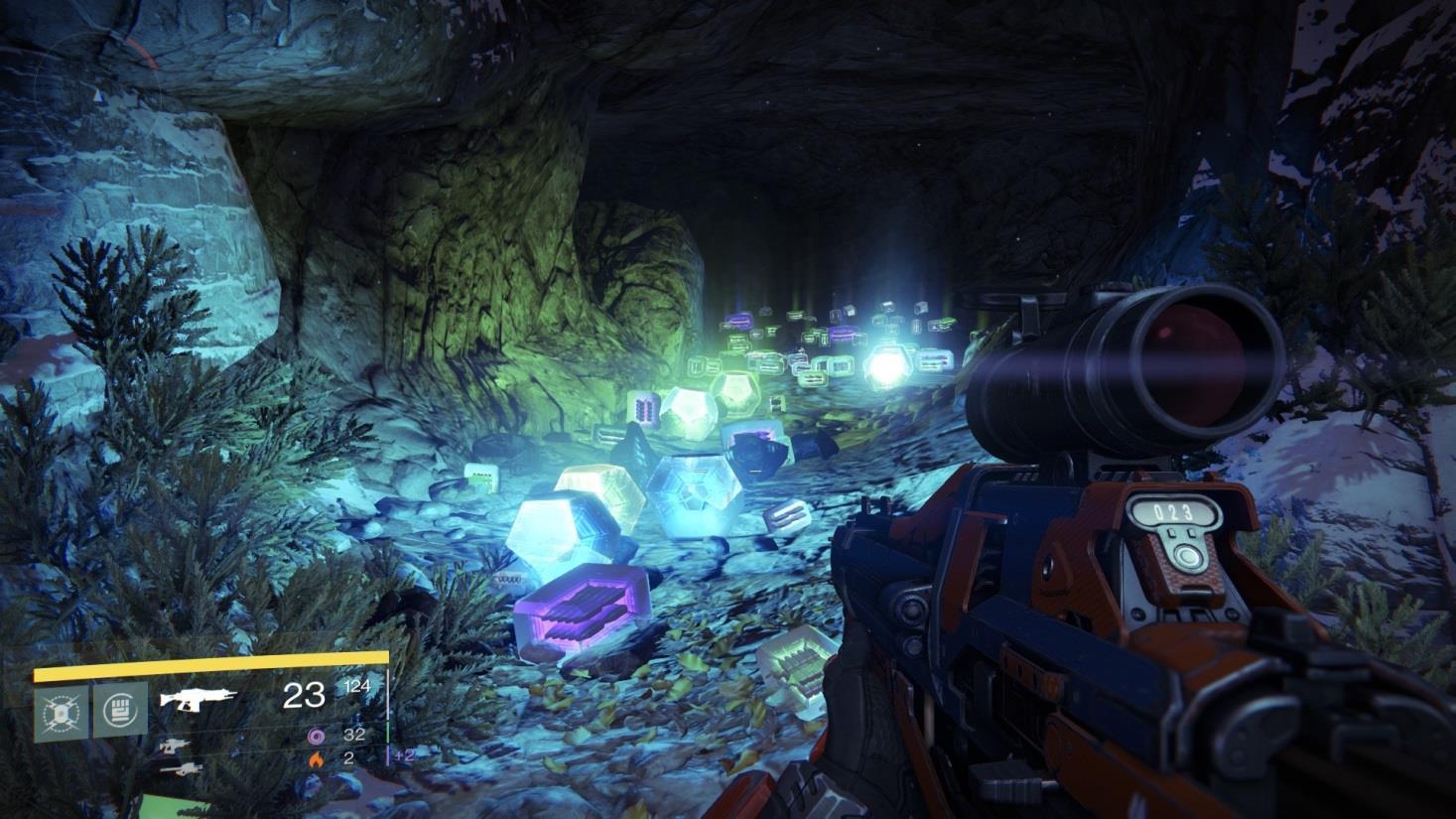
The short timeline
- September 2014: The original Destiny loot cave becomes a subject of player discussion and farming coverage.
- September 25: Update 1.0.1.5 changes the Skywatch timer to 40 seconds; several other cave timers also change. [1]
- September 27: Contemporary commentary is already discussing another cave and whether the underlying reward incentives remain. [2]
What the patch actually changed
| Comparison | Before | After 1.0.1.5 |
|---|---|---|
| Respawn timer | 6 seconds | 40 seconds |
| Relative waiting interval | 1× | About 6.7× |
| Actual loot per hour | Not established by these patch notes | |
The ratio comes from 40 ÷ 6. It measures a timer change, not a 6.7-fold reduction in valuable drops. Kill time, collection time and random drops complicate that conversion. The source supports a slower spawn loop; it does not supply a controlled farming benchmark.
Why repetition could feel like the better option
Our analysis: A reward loop does not need to be the most exciting activity to become attractive. It needs to feel understandable. A cave gives a player a small number of decisions: where to stand, when to shoot and when to collect. That predictability can make a repetitive activity feel more manageable than a longer mission with an uncertain outcome.
There is also a difference between enjoying combat and pursuing an upgrade. The same player can want a demanding encounter one evening and a low-effort routine the next. Calling every farmer lazy misses that distinction. The useful design question is whether the game rewards the activities it wants players to choose.
This is an explanation of the incentive, not proof that the cave was the best source of equipment. In his contemporary commentary, Erik Kain reported unimpressive drops from his own visit. That is one attributed experience, not a universal drop-rate measurement. [2]
Why slowing the cave was only part of the answer
A longer wait makes one farming spot less convenient. It does not, by itself, make a strike more satisfying. If the attraction is predictable progress with little friction, a player can simply look for another repeatable routine.
From a player’s perspective, a convincing reward adjustment has two sides: remove an outlier that distorts choices, and make the intended activity worth choosing. Otherwise a patch can feel like a lost option rather than a better game. That is our design judgment; the timer notes alone cannot establish how every player reacted.
The takeaway
The loot cave exposes a tension between the adventure a game presents and the routine its reward system encourages. The useful question is not simply why somebody would shoot at a hole. It is what made that hole feel like a reasonable use of their time.