Destiny 2 / SEPTEMBER 2023
Destiny 2’s Crafting Glitch: Why Bungie Couldn’t Just Switch It Off
The September 2023 Craftening explained: recipe data, temporary perk restrictions, weapon repair, and the trade-off between chaos and fair play.
Short answer
The September 2023 Destiny 2 crafting glitch let data from one crafting recipe affect another. Bungie described a code problem, while its live-update tools could change content but not repair that code. Restricting perks could contain some effects; stopping invalid weapons and repairing existing ones required further work. [1]
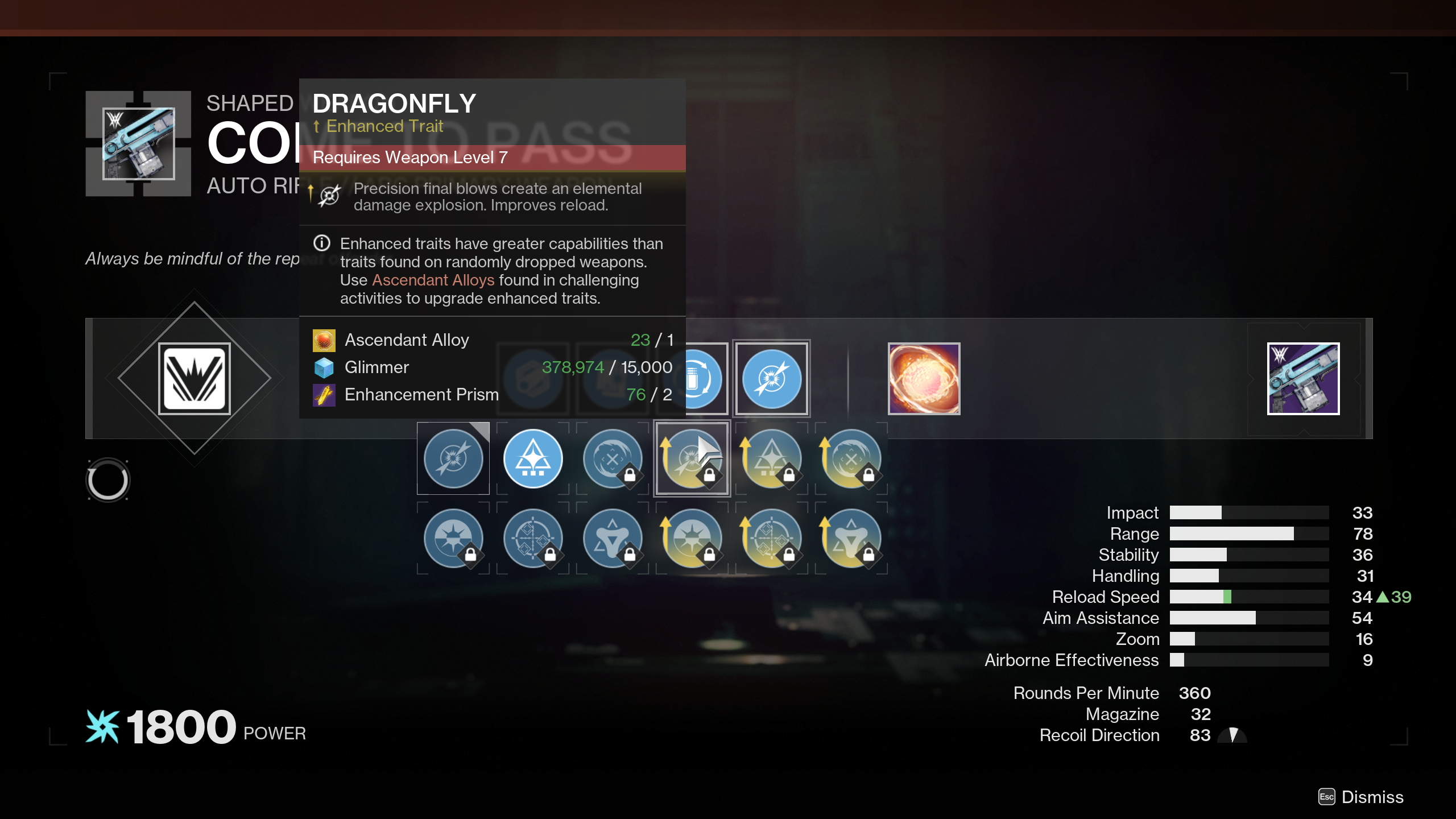
What happened during the Craftening?
Bungie’s account dates its discovery to Friday, September 15. A limited perk-disabling update followed on Sunday, September 17, with a rolling restart addressing weapons that retained effects. The September 21 developer explanation then described the code-fix process: prevent new invalid items, identify affected weapons, restore valid states and check that legitimate weapons remain intact. [1]
That distinction matters when watching clips of the event. This article concerns a historical crafting failure. It is not a guide to reproducing the exploit, and footage from that weekend should not be treated as a demonstration of normal weapon balance.
Containment versus repair
| Question | Temporary response | Code repair |
|---|---|---|
| Main purpose | Suppress selected perk effects | Prevent and correct invalid weapons |
| Constraint | Live content changes have limits | Must protect valid player items |
| Player concern | What works right now? | Will my legitimate gear survive? |
Bungie also explained that an attempted equipment-disable approach left some weapon behavior active in testing. A visible disabled state was not sufficient evidence that every effect had stopped. [1]
Why “just disable crafting” misses half the problem
Our analysis: Imagine closing a workshop after it has shipped defective equipment. Closing the door prevents another delivery, but does not retrieve what has already left. A live game has the same conceptual problem whenever invalid items persist beyond the action that created them.
A repair also needs to distinguish an impossible combination from an unusual but valid one. To a player who has spent time building a weapon, an indiscriminate reset would create a second problem. That is why the quality of the recovery matters alongside its speed.
The analogy is deliberately limited. It explains the difference between preventing creation and correcting existing items; it does not claim to describe Bungie’s database structure, server architecture or an exact number of damaged weapons. Those details are not established here.
Fun for whom?
A wildly overpowered weapon can make a private encounter feel like a temporary playground. But a shared competitive match has a different agreement: opponents expect to face tools governed by the same rules. When a bug becomes a practical prerequisite, players who decline to use it lose meaningful choice.
That does not require claiming that everyone hated the event, or that nobody could win without the glitch. It means judging the experience by who bears the cost. The person enjoying an absurd loadout and the opponent trying to play an ordinary match can reasonably describe the same weekend very differently.
A deliberately designed chaos mode could set expectations in advance. An accidental failure cannot offer that same clarity. Novelty and competitive fairness are separate design goals, and an event can succeed at one while undermining the other.
The takeaway
The Craftening is a useful example of why a live-game fix has more than one finish line: stop the immediate disruption, prevent recurrence, and preserve legitimate progress. A quick visible restriction is only one part of that work. Bungie’s explanation makes the trade-offs easier to judge without pretending every delay is harmless.